





Table of Contents
Introduction: The Explosion of Polytechnic Artificial Intelligence Programs
A decade ago, artificial intelligence was primarily limited to university research laboratories and tech firm conference rooms. Now it’s being taught in a far different context: polytechnic classrooms, where students learn practical, job-ready skills rather than abstract principles. Polytechnic AI programs have become hugely popular because they tackle a real problem: the business is desperate for people who can really design and deploy AI systems, not merely understand the theory behind it. We’ll review what these programs really include, why they’re so popular, how to pick the proper one, and what to think about before you enroll.
What is Artificial Intelligence Education at Polytechnic
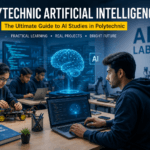
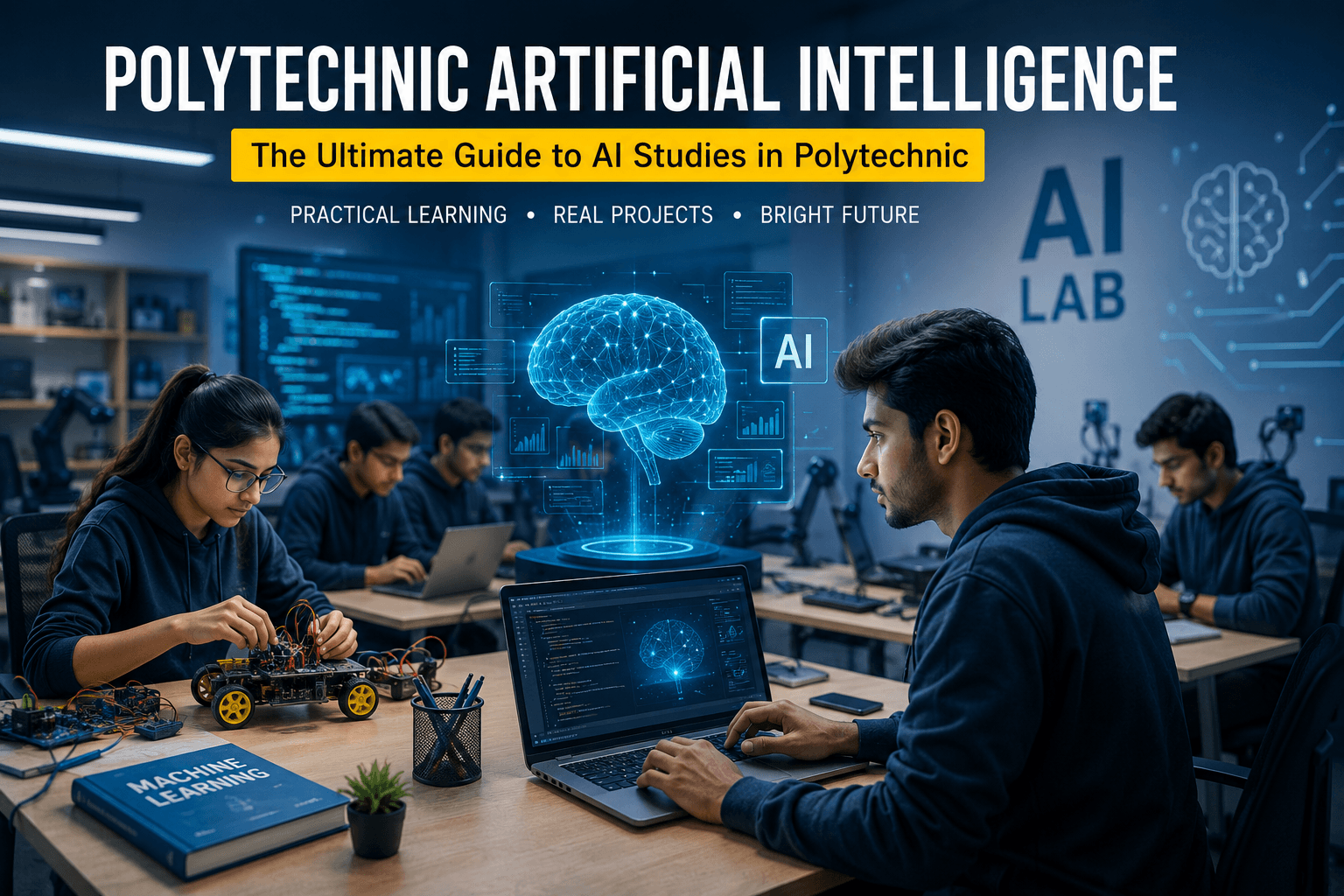
Polytechnic artificial intelligence education is defined as the diploma certificate and applied degree programs offered at polytechnic institutes that focus on the practical application of AI technologies. Polytechnic AI programs are structured around hands-on training, coding, working with real datasets, building machine learning models, and applying AI tools to genuine industrial challenges from early in the program unlike typical four-year computer science degrees that generally emphasize theory first.
These programs are often in between practical training and full-blown academic degrees, offering students a speedier more direct route into AI-related employment without the need for years of purely theoretical study first.
Core Subjects in Polytechnic AI Courses
Most university artificial intelligence programs will include a consistent core of: principles of programming typically Python basics of machine learning, data analysis and visualization, neural networks, natural language processing, computer vision, and increasingly, applied ethics around AI deployment. Many schools also have a capstone project where students create a working AI application before graduating. This gives, them something concrete to demonstrate to an employer.
Why Are Polytechnic Artificial Intelligence Programs Growing So Fast?
The interest in polytechnic artificial intelligence originates, from a mismatch between the speed at which AI is being adopted throughout sectors and how slowly traditional academic pipelines, can generate graduates who are ready for jobs. Employers are increasingly looking for people who can apply AI tools to existing operations, not necessarily those who can prove theorems about neural network convergence.
The Call for Practical Job-Ready AI Skills
Polytechnic Artificial Intelligence have long been known for bridging that gap for other technical professions from mechanical engineering to nursing and AI has simply become the next subject to fall under that model. The programs are shorter than standard degrees typically taking two to three years to complete and are focused specifically around the talents that local firms are recruiting for making them appealing to students who desire a quicker route into the workforce.
Lower Cost and Less Time Commitment
A polytechnic AI diploma costs a fraction of a four year university degree and can be completed in a much shorter time which is meaningful for students considering the return on investment of a technical education especially in a field where a lot of employers tend to care more about the practical skills than the name of the institution on a diploma.
How to Choose the Best Polytechnic Artificial Intelligence Program
Explore, Job Placement Rates and Industry Partnerships
However, not all Polytechnic Artificial Intelligence programs are equal. Some have close collaboration with local tech companies, offering internships and direct hiring pipelines following graduation. Before signing on for a program, check its job placement rate and company relationships. You’ll get a better sense of its real-world worth than by browsing the course catalogue.
Assess the ratio of theory and practice in the curriculum.
A good Polytechnic Artificial Intelligence program should be heavily practical, but also include enough underlying theory — statistics, fundamental linear algebra, and core machine learning ideas — so that graduates know not just how to run current code, but why a model performs the way it does.
Evaluate the Tools and Software Taught
AI tools evolve rapidly so it’s important that a program teaches current, industry-standard frameworks, not outdated software that is no longer used by employers. It might be a good method to determine how contemporary a program actually is to look at a syllabus and see what specific tools are mentioned, not general words like “machine learning software.
Look at Class Size and Access to Hands-on Equipment
Training AI needs sufficient computational resources, be it cloud credits, GPUs or dedicated labs. Programs with smaller class sizes and specialized lab access tend to give students more practical hands on time developing and testing models.
Advantages of Studying Artificial Intelligence in a Polytechnic Institute
- A quicker route to employment than a typical four year degree
- Reduced overall tuition cost Emphasis on practical job ready skills
- Practical project experience that you can put on your portfolio when applying for jobs
- Often stronger, more direct business partnerships than large academic programs
Disadvantages of Studying Artificial Intelligence at a Polytechnic Institute
- Curriculum is up to date with what employers are actually hiring for
- Less focus on deep theoretical underpinnings than a full university degree
- Few research options for students who want to pursue an academic or R&D career in AI
- Program quality is very different from one university to another, so do your research before you join up
- Some organizations, particularly for advanced research positions, still favour traditional degrees
- Less ability to pivot into unrelated topics than a wider academic degree
Polytechnic Artificial Intelligence FAQ
Is an AI polytechnic diploma sufficient to gain a job in AI?
Yes, for many applied professions such as AI implementation, data analysis, or machine learning support roles, especially with a good portfolio of hands-on projects. Research-oriented or highly specialized positions nevertheless generally require more study.
How long does a polytechnic AI program take?
Most diploma and certificate programs in Artificial Intelligence are between one and three years, depending on if it’s a short certificate track or a full diploma program with a capstone project.
How does a polytechnic AI program compare to a computer science university degree?
Polytechnic education is usually more practical and hands-on with a shorter time frame . University degrees are more in-depth and theoretical with research opportunities and usually a lengthier four years duration .
Is there a lot of math involved in studying AI in a polytechnic?
You should have some comfort with algebra and statistics but most Polytechnic Artificial Intelligence build up the math you need as you go along with the actual course work rather than sophisticated math being a pre-requisite.
What professional options are there after a polytechnic AI course?
Typical career pathways include machine-learning technician AI support engineer data analyst automation specialist and junior roles in implementing AI products with many graduates moving into more specialized positions after a few years of hands-on experience.
Conclusion: Is Polytechnic AI Education Worth It?
Polytechnic AI programs have carved out a real practical space between vocational training and full academic study and for students who want to get straight into the AI workforce with hands-on, job-ready abilities that niche is a very useful one. The key is to be careful in picking a program and to look at the actual relationships with industry and job placement rates not just the names of the courses and to be honest with yourself whether a shorter more applied program is a better fit for your career aspirations than a lengthier more theory based university degree. For a lot of students coming into a fast-moving field like AI that practical direct route is precisely why polytechnic education is worth serious consideration.