








Table of Contents
Introduction
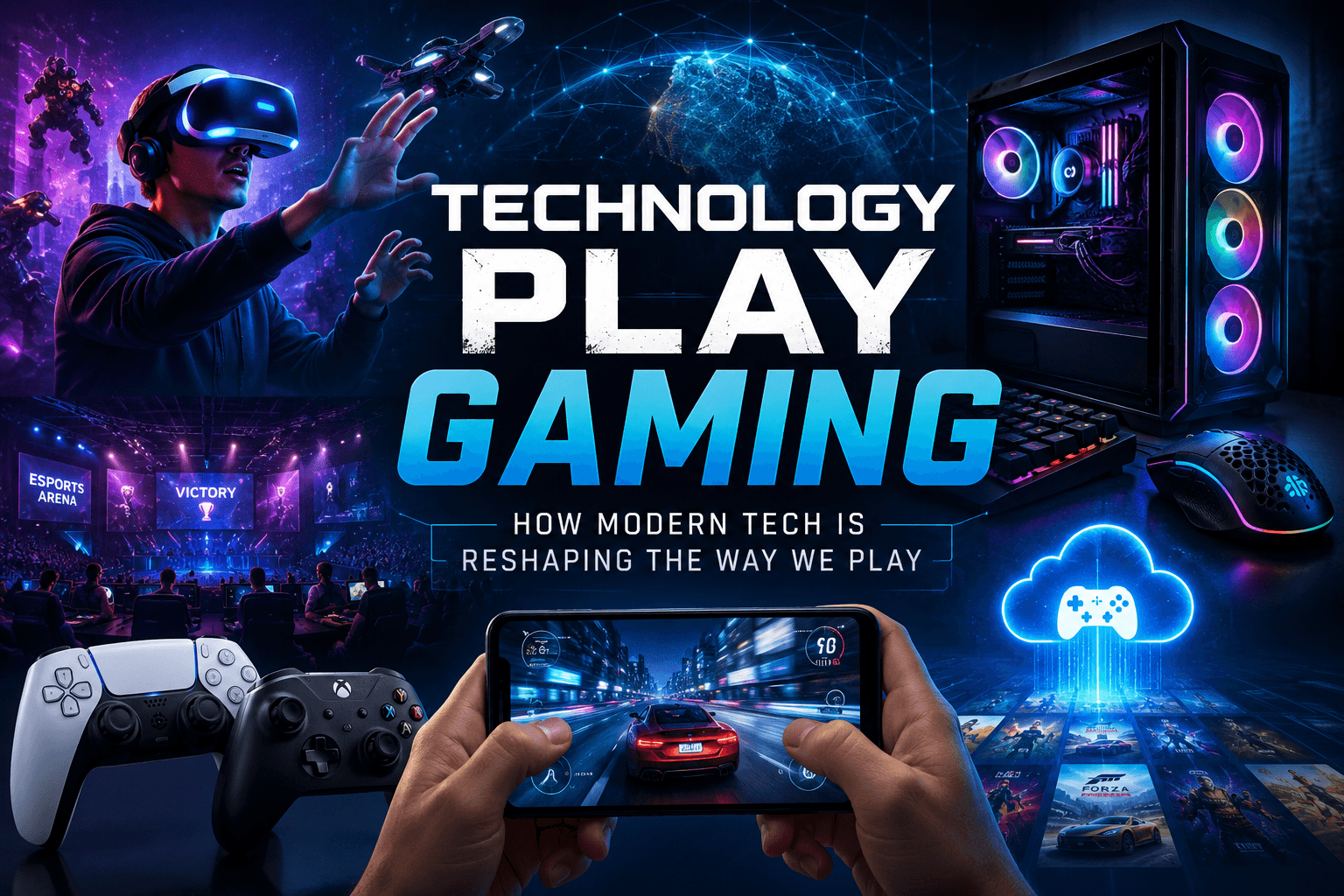
Ask ten gamers what “technology play gaming” means and you’ll probably get ten different answers — and honestly, that’s kind of the point. It isn’t one product, one company, or one gadget. It’s the whole web of processors, networks, engines, and screens that quietly work together every time someone picks up a controller, taps a phone screen, or straps on a VR headset.
Twenty years ago, playing a game meant popping a cartridge into a console and hoping the graphics didn’t look too blocky. Today, a match can involve a player in Lahore, a server farm somewhere in Europe, and an opponent halfway across the world, all connected in real time without anyone thinking twice about it. That shift didn’t happen by accident — it happened because the technology behind gaming kept getting faster, smarter, and more connected.
This piece looks at what actually sits underneath technology play gaming today, how different platforms stack up against each other, and where things seem to be heading next.
Breaking Down What Technology Play Gaming Actually Covers
The phrase gets used loosely online, but at its heart, technology play gaming describes the combined effect of computing hardware, software design, and internet infrastructure that makes video games possible on any device you own.
That’s a wide net on purpose. A mobile puzzle game and a competitive first-person shooter running on a gaming PC couldn’t look more different, yet both depend on the same underlying categories of technology — just tuned very differently depending on what the game needs to do.
Why One Term Covers So Much Ground
Part of the reason technology play gaming feels so broad as a topic is that gaming itself stopped being a single industry a long time ago. It split into consoles, PC rigs, mobile apps, cloud streaming, and immersive VR/AR experiences — and each of those branches leans on a slightly different mix of hardware and software to function.
The Building Blocks Powering Every Game You Play
Peel back the graphics and menus, and every game — no matter how simple — is running on a handful of core systems working in the background.
Processors: The Brains and the Eyes
The CPU handles the logic side of things: physics calculations, decision-making for enemies or NPCs, and keeping track of everything happening in a game world at once. The GPU takes care of the visual side — rendering lighting, shadows, textures, and motion smoothly enough that your eyes don’t catch the seams. Companies like NVIDIA, AMD, and Intel have spent years pushing these components further, which is a big reason games today can look almost photorealistic compared to what was possible a decade ago.
Game Engines Doing the Heavy Lifting
Very few studios build a game entirely from scratch anymore. Instead, most rely on game engines — pre-built software frameworks that handle physics, rendering, and animation so developers can focus on actual game design instead of reinventing basic systems every time. This is a big reason small independent teams can now put out visually impressive titles that once would have needed a massive studio budget.
Servers and Networking Behind Multiplayer
Anytime you play online, there’s an invisible layer of servers, matchmaking systems, and anti-cheat software working to keep the match fair and the connection stable. Latency — the delay between an action and its result on screen — is the enemy here, and a huge amount of engineering goes into shaving milliseconds off that delay.
Cloud Gaming’s Different Approach
Cloud gaming flips the usual setup on its head. Instead of your device doing the heavy processing, a remote server handles it and streams the video feed straight to you, similar to watching a live broadcast. It’s a clever way to let people play demanding games on modest hardware, though it lives and dies by how strong your internet connection is.
VR and AR: Stepping Into the Game
Virtual reality builds a fully enclosed digital world you view through a headset, while augmented reality layers digital elements onto your actual surroundings. Both represent a move away from flat screens toward something more physical — games that respond to where you look and how you move, not just which buttons you press.
If you’re curious how far this idea of rhythm and responsiveness extends beyond gaming — into music, health, and everyday technology — our piece on what Pulsamento means is worth a read.
Comparing the Main Gaming Platforms in Technology Play Gaming
Not every platform is trying to solve the same problem, which is why picking one often comes down to personal priorities rather than a single “best” option.
PC Gaming: Built for Tinkerers
Within technology play gaming, PCs give players the most control — swap a graphics card, tweak settings, chase higher frame rates. It’s the platform for people who enjoy fine-tuning their setup as much as playing the games themselves.
Consoles: Built for Simplicity
Consoles trade that flexibility for convenience. There’s no compatibility checklist to worry about — you plug it in, and it works. That predictability is exactly what a lot of players are looking for.
Mobile: Built for Reach
In terms of sheer player numbers, mobile gaming wins by a wide margin. It doesn’t require dedicated hardware, it fits into spare moments during the day, and it’s opened gaming up to people who’d never buy a console or build a PC.
Cloud Platforms: Built for Access
These services try to remove the entry barrier entirely — no expensive hardware needed, just a strong enough connection. The catch is that performance is only as good as your internet allows it to be.
Where Esports Fits Into the Picture
Competitive gaming has grown into a genuine industry of its own, and it leans on some of the most specialized corners of technology play gaming that casual play doesn’t usually need.
Hardware Tuned for Milliseconds
High-refresh monitors, low-latency keyboards and mice, and carefully optimized network setups aren’t just nice extras for esports players — they’re often the difference between winning and losing a close match. When reaction time is measured in fractions of a second, every bit of lag matters.
Streaming Turns Matches Into Spectacles
Tournaments now rely on broadcast-level streaming setups, live analytics overlays, and platforms capable of handling millions of simultaneous viewers. What used to be a niche hobby watched by a handful of people has turned into an event that fills arenas and streams to global audiences.
A Few Myths Worth Clearing Up About Technology Play Gaming
Some assumptions about technology play gaming stick around long after they’ve stopped being true.
“You need top-tier hardware to enjoy gaming.” Not anymore. Between mobile titles, cloud streaming, and older consoles that still run plenty of modern games well, there are more affordable entry points than there used to be.
“Cloud gaming is about to replace physical hardware completely.” It’s growing, but internet quality still varies wildly by region, and plenty of players still prefer owning their setup for the control and reliability it offers.
“AI-driven characters think for themselves.” They’re smarter and more responsive than older scripted enemies, sure — but they’re still working within limits developers built for them, not making truly independent decisions.
Picking a Technology Play Gaming Setup That Fits How You Play
With so many options available in technology play gaming today, the right choice usually comes down to a few honest questions rather than chasing whatever looks most impressive.
How do you actually spend time gaming? Someone squeezing in a few rounds during a commute has very different needs than someone grinding ranked matches every night. Casual players often get more out of mobile or cloud options, while competitive players tend to benefit more from dedicated hardware.
What does your internet connection actually support? Cloud gaming and most online multiplayer titles depend on a stable connection. It’s worth checking your actual speeds before building a setup around cloud-first play.
What are you willing to spend, and when? Consoles and PCs cost more upfront but tend to hold their value in performance for years. Mobile and cloud options lower that initial cost but often replace it with an ongoing subscription instead.
Interestingly, this same shift toward smarter, adaptive tools isn’t unique to gaming. Similar ideas are reshaping classrooms too — our guide on gadgets in education covers how comparable technology is changing the way students learn.
Where Technology Play Gaming Is Headed Next
The pace of change hasn’t slowed down, and a few directions stand out for where technology play gaming is likely to go next.
Smarter AI Opponents
Game developers are increasingly using machine learning to build non-player characters that react and adapt based on how a person actually plays, rather than following fixed, predictable scripts.
Deeper Immersion
As VR and AR hardware becomes lighter and more affordable, fully immersive experiences are likely to move from a niche interest into something far more mainstream.
Cross-Platform Play
More games now let PC, console, and mobile players compete in the same match together, breaking down walls that used to separate gaming communities based on the device they owned.
For a closer look at some of the specific innovations driving this shift, this roundup of emerging gaming technology trends is a solid resource worth checking out.
Frequently Asked Questions
What does “technology play gaming” actually refer to? It’s a broad way of describing the combined hardware, software, and network systems — processors, engines, servers, and more — that let video games run and be played across consoles, PCs, phones, and cloud platforms.
Is cloud gaming the same thing as technology play gaming? Not exactly. Cloud gaming is just one piece of the bigger picture. Technology play gaming is the broader concept that includes cloud gaming along with hardware, game engines, networking, and immersive technologies like VR and AR.
Do I need expensive equipment to be part of modern gaming? Not really. Mobile and cloud gaming exist specifically to lower that barrier, letting people play demanding titles without owning high-end hardware.
How has AI changed the way games are built and played? AI now helps create more responsive non-player characters, adjusts difficulty based on how someone’s actually playing, and in some cases helps generate content dynamically — all aimed at making games feel less repetitive over time.
Why do professional esports players use specialized gear? Because competitive matches often come down to split-second reactions, high-refresh monitors and low-latency devices help minimize any delay between an action and its result on screen.
What’s likely to change in gaming technology over the next few years? Expect cloud gaming to keep expanding its reach, AI to play a bigger role in how games adapt to players, VR and AR hardware to get lighter and cheaper, and cross-platform play to keep breaking down the walls between consoles, PCs, and mobile.
Final Thoughts
Strip away the marketing buzzwords, and technology play gaming really just describes the constantly shifting mix of processing power, clever software, and connectivity that lets people play the way they want to, on whatever device they happen to have. Whether that’s a quick mobile match between errands or a packed esports arena watched by millions online, the underlying story is the same — better technology keeps making play more accessible, more immersive, and more connected than it’s ever been.