









Table of Contents
Introduction
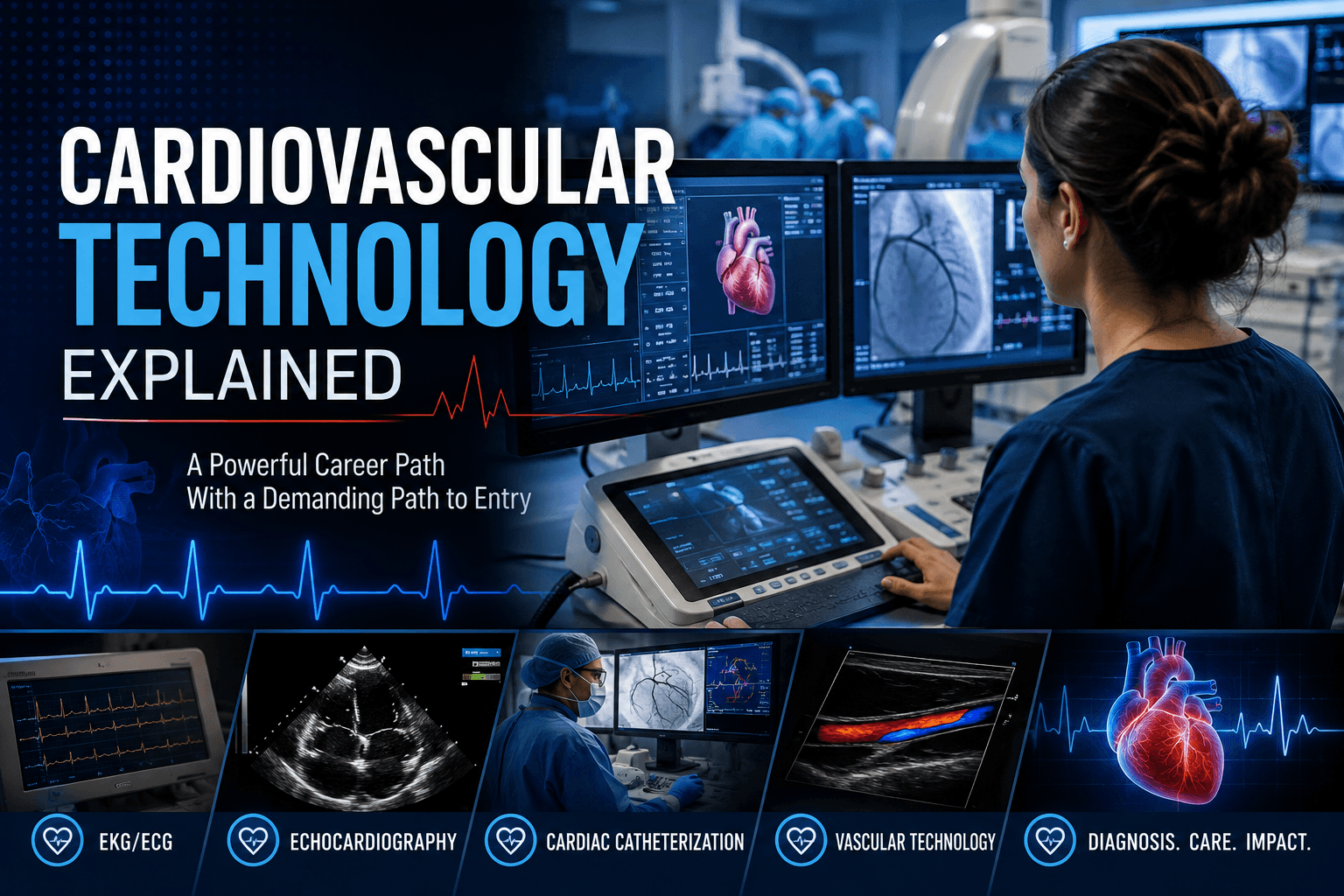
Every time a doctor reviews an EKG strip, guides a catheter through a blood vessel during a cardiac procedure, or looks at an echocardiogram to check how well a heart is pumping, there’s a trained specialist behind that data — someone working in cardiovascular technology. It’s one of those healthcare careers that touches an enormous number of patients without most people ever learning the job title of the person actually running the equipment.
This guide breaks down what cardiovascular technology actually involves, the different specialties within the field, the education and certification path required to enter it, and what to realistically expect from this career before committing to it.
What Is Cardiovascular Technology?
Cardiovascular technology refers to the branch of allied health focused on diagnosing and assisting in the treatment of heart and blood vessel conditions using specialized equipment and procedures. Professionals in this field — commonly called cardiovascular technologists or technicians — work alongside cardiologists to capture, monitor, and interpret data about how a patient’s heart and circulatory system are functioning.
Unlike a purely administrative or support role, cardiovascular technology involves direct, hands-on patient interaction, often during procedures where accuracy and calm under pressure genuinely matter.
Where Cardiovascular Technologists Work
These professionals typically work in hospitals, outpatient cardiac catheterization labs, private cardiology practices, and diagnostic imaging centers, with the specific setting often depending on which specialty within cardiovascular technology someone pursues.
The Main Specialties Within Cardiovascular Technology
The field isn’t a single job description — it splits into a few distinct specialty areas, each requiring somewhat different skills and training focus.
Invasive Cardiovascular Technology
This specialty involves assisting physicians directly during procedures like cardiac catheterization, where a catheter is threaded through blood vessels to diagnose or treat heart conditions. Technologists in this area typically work in a cath lab, monitoring patient vitals and operating specialized imaging equipment throughout the procedure.
Noninvasive Cardiovascular Technology (Echocardiography)
Echocardiography technologists use ultrasound equipment to create moving images of the heart, allowing physicians to assess how well heart valves and chambers are functioning without any surgical procedure involved. This is one of the more common entry points into cardiovascular technology given its non-surgical nature.
Electrocardiography (EKG/ECG)
This specialty focuses on running electrocardiograms, administering stress tests, and fitting patients with Holter monitors that track heart activity over extended periods. It’s often considered one of the more accessible starting points within cardiovascular technology, sometimes requiring shorter training programs than the invasive or echocardiography tracks.
Vascular Technology
Vascular technologists specialize specifically in evaluating blood flow abnormalities throughout the body’s blood vessels, rather than focusing solely on the heart itself, using ultrasound-based techniques to detect blockages, clots, or other circulatory issues.
Education and Training Path in Cardiovascular Technology
Entering this field requires a structured educational path, though the specific route varies depending on which specialty someone plans to pursue.
Formal Degree Programs
Most cardiovascular technology careers require completing an associate degree program, typically around two years, combining classroom instruction in anatomy, physiology, and patient care with substantial hands-on clinical training in an actual healthcare setting. A growing number of programs also offer bachelor’s degree options for those pursuing more advanced roles within the field.
Accreditation Matters
Programs accredited through recognized bodies like CAAHEP (Commission on Accreditation of Allied Health Education Programs) or meeting CHEA-recognized standards tend to align most directly with certification eligibility requirements, making program accreditation worth checking carefully before enrolling.
Certification in Cardiovascular Technology
While not always legally mandatory, certification has become a practical expectation across most employers in this field.
Cardiovascular Credentialing International (CCI)
Founded in 1968, CCI is one of the two primary certifying bodies for cardiovascular technology professionals, offering multiple credential levels depending on experience — from entry-level certificate credentials for students and recent graduates up through advanced registry-level credentials requiring more extensive clinical experience.
American Registry for Diagnostic Medical Sonography (ARDMS)
ARDMS offers an alternative certification path, particularly relevant for those specializing in ultrasound-based areas like echocardiography and vascular technology, and certifies professionals across a broad range of sonography specialties beyond cardiovascular work specifically.
Ongoing Certification Requirements
Maintaining certification in cardiovascular technology typically requires paying annual renewal fees and completing continuing education units on a recurring cycle, reflecting how quickly equipment and procedures in this field continue to evolve.
Cardiovascular Technology: Pros and Cons
| Pros | Cons |
|---|---|
| Strong, hands-on patient-care role | Physically demanding |
| Multiple specialty paths to choose from | Formal training required before entry |
| Growing demand in healthcare | High-stress situations during procedures |
| Shorter training than many clinical careers | Additional certification may be needed to advance |
Skills That Matter in Cardiovascular Technology
Beyond formal training, a few practical skills tend to separate technologists who thrive in this field from those who struggle to adjust.
Attention to detail under pressure. Misreading equipment data or mishandling a procedure step can have real consequences, making precision a genuinely non-negotiable skill in this line of work.
Comfort with direct patient interaction. Unlike some allied health roles focused primarily on lab work, cardiovascular technology involves constant, direct contact with often anxious or unwell patients, requiring genuine bedside manner alongside technical competence.
Physical stamina. Many roles within cardiovascular technology, particularly in invasive procedures, require standing for extended periods and wearing protective equipment like lead aprons during imaging-heavy procedures.
Comfort with continuous learning. Given how frequently equipment and procedural standards evolve in cardiology, staying current through continuing education isn’t optional for maintaining certification and staying genuinely competent in the role.
Common Mistakes People Make When Entering Cardiovascular Technology
A few recurring missteps show up among people exploring this career for the first time.
Choosing an unaccredited program without checking certification eligibility. Some certification paths specifically require graduation from an accredited program, so verifying this before enrolling avoids a costly, time-consuming mismatch later.
Underestimating the physical demands of the role. Long procedures, standing for extended periods, and wearing protective lead aprons during imaging work catch some newcomers off guard if they haven’t spent time shadowing someone already in the field.
Picking a specialty without researching the day-to-day reality. Invasive cardiovascular technology and echocardiography, for instance, involve meaningfully different daily routines and stress levels, and choosing based on salary alone without considering fit often leads to early career dissatisfaction.
Skipping continuing education after initial certification. Since certifications require periodic renewal and continuing education units, treating the credential as a one-time achievement rather than an ongoing requirement can jeopardize employment eligibility down the line.
How to Get Started Exploring Cardiovascular Technology as a Career
For anyone seriously considering this path, a few practical steps help clarify whether it’s genuinely the right fit before committing significant time and money to formal training.
Shadow a working technologist if possible. Firsthand exposure to a cath lab or echocardiography department gives a far more realistic picture of daily demands than program brochures or job descriptions alone.
Research accredited programs in your region. Since program availability and specialty focus vary significantly by location, comparing a few nearby accredited options helps identify realistic, practical choices early.
Talk to current professionals about specialty tradeoffs. People already working in invasive, noninvasive, EKG, or vascular specialties can offer insight into which path best matches specific interests and physical comfort levels that generic program descriptions rarely capture.
Frequently Asked Questions
How long does it take to become a cardiovascular technologist? Most formal education programs take around two years for an associate degree, though the exact timeline can vary depending on the specific specialty and whether someone pursues a bachelor’s degree route instead.
Is certification required to work in cardiovascular technology? Certification isn’t always legally mandatory, but it’s widely expected by employers and can significantly affect job opportunities and career advancement within the field.
What’s the difference between invasive and noninvasive cardiovascular technology? Invasive cardiovascular technology involves assisting during procedures like cardiac catheterization, while noninvasive technology, such as echocardiography, relies on ultrasound and other imaging methods that don’t require entering the body.
Which specialty within cardiovascular technology is easiest to enter? Electrocardiography (EKG) is often considered one of the more accessible entry points, sometimes involving shorter training timelines compared to invasive or advanced sonography-based specialties.
Do cardiovascular technologists need a bachelor’s degree? An associate degree is generally sufficient for entry-level roles, though a bachelor’s degree can support career advancement, particularly for those pursuing more specialized or supervisory positions.
What industries employ cardiovascular technologists beyond hospitals? Outpatient cardiac catheterization labs, private cardiology practices, diagnostic imaging centers, and increasingly, medical equipment sales and education roles all employ professionals trained in cardiovascular technology.
Final Thoughts
Cardiovascular technology sits at a genuinely important intersection of healthcare and technical skill, offering multiple specialty paths for people drawn to hands-on patient care without necessarily pursuing a longer nursing or physician track. The formal education and certification requirements are real commitments, but for those who thrive under precision-focused, patient-facing work, it remains one of the more accessible entry points into a clinically meaningful healthcare career.