







Table of Contents
Introduction
Every startup founder hits the same wall eventually — a growing to-do list, a shrinking budget, and a nagging feeling that there has to be a smarter way to get things done. That’s usually where startup gadgets come into the picture. Not flashy tech for the sake of looking modern, but practical tools that quietly save time, cut costs, and help a small team punch above its weight.
The right startup gadgets don’t just make a workspace look impressive — they change how work actually gets done. This guide walks through which categories of startup gadgets genuinely matter, what to look for before buying, and a few picks worth considering as your business grows.
Why Startup Gadgets Matter More Than People Assume
New businesses run on limited time, limited staff, and limited cash. That combination makes efficiency non-negotiable, and this is exactly where startup gadgets earn their keep. A well-chosen piece of office tech can quietly replace tasks that would otherwise eat up hours every week — freeing founders to focus on the parts of the business that actually need a human touch.
The Real Value Isn’t the Gadget Itself
It’s tempting to think business gadgets matter because they’re impressive to show off. In reality, the value comes from what they free up: fewer manual tasks, fewer bottlenecks, and fewer excuses for delays. A team that invests wisely in productivity gadgets tends to move faster simply because friction gets removed from everyday processes.
Categories of Startup Gadgets Worth Knowing About
Not every gadget belongs in every startup. The right picks depend heavily on the kind of work the business actually does. Still, a few categories show up again and again across different industries.
Productivity and Workspace Gadgets
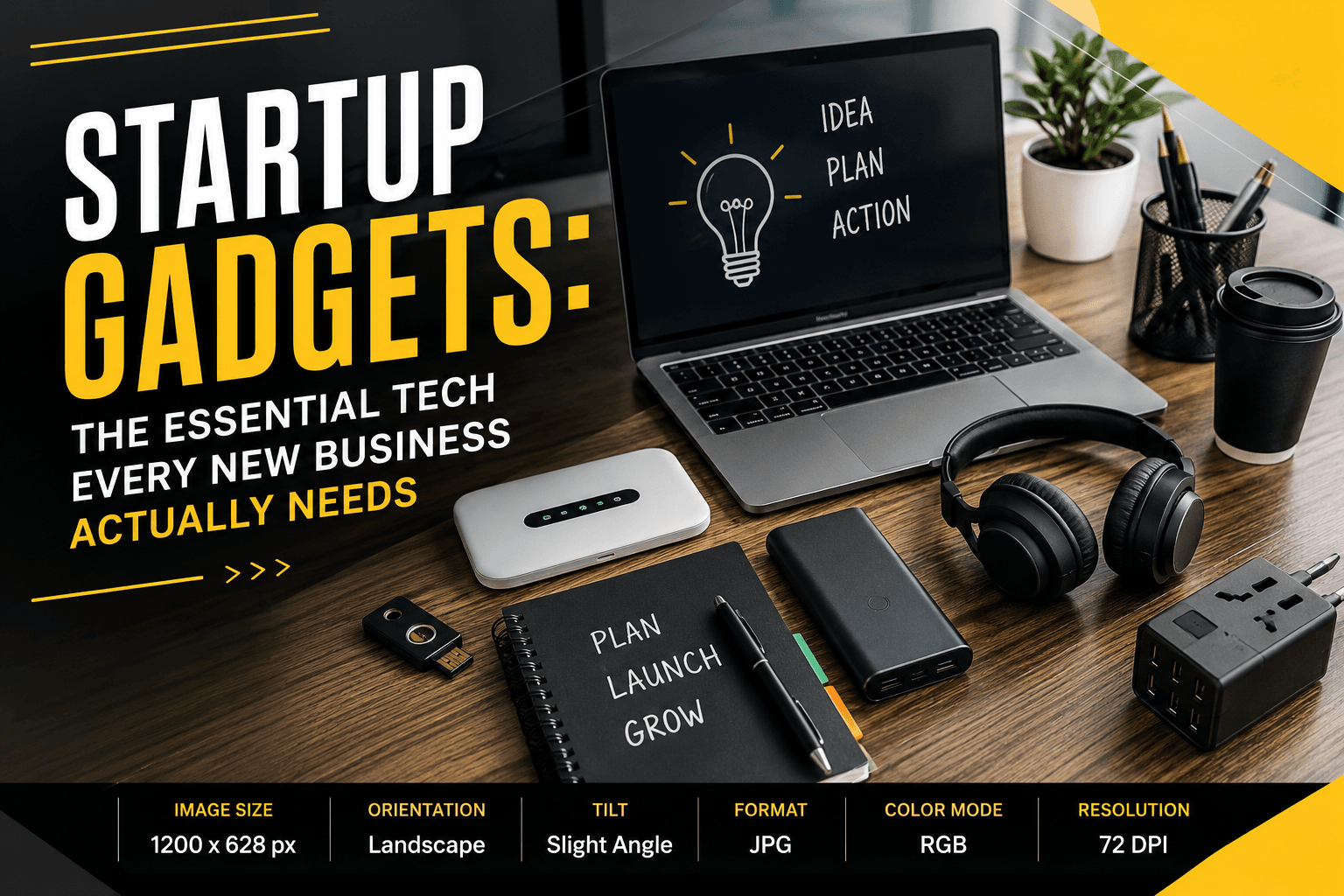
Smart notebooks, noise-cancelling headphones, and portable monitors are some of the most common productivity gadgets found on founders’ desks. They’re built around one goal: helping people focus and work efficiently, whether that’s in a shared office or a spare bedroom turned into a workspace.
Connectivity and Mobile Work Tools
Startups rarely operate from a single fixed location anymore. Portable Wi-Fi hotspots, compact power banks, and multi-device chargers have become standard entrepreneur gadgets for teams that need to stay connected while pitching investors, attending events, or working remotely.
Smart Office Equipment
Compact printers, smart whiteboards, and video conferencing setups fall into this category. As hybrid work becomes the norm rather than the exception, these smart office devices help small teams run meetings and collaborate without needing a full corporate office setup.
Security and Data Protection Gadgets
Hardware security keys, encrypted external drives, and privacy screens are often overlooked, but they matter a lot for startups handling sensitive client data or early-stage intellectual property. This kind of business equipment isn’t glamorous, but they prevent problems that could otherwise be very costly.
If you’re exploring how emerging technology shapes fast-moving industries beyond hardware alone, our breakdown of technology play gaming covers a similar idea — how the right combination of tools changes what’s possible for an entire sector.
What to Actually Look for Before Buying Startup Gadgets
With so many options on the market, it’s easy to end up buying gadgets that look useful but never actually get used. A few practical filters help avoid that.
Does It Solve a Real, Recurring Problem?
The best office tech tools solve something that comes up again and again — not a one-off inconvenience. If a tool only helps in rare situations, it’s rarely worth the investment for an early-stage business watching every dollar.
Will It Scale With the Team?
Some business gadgets work great for a two-person team but become a bottleneck once the company grows to fifteen people. It’s worth thinking about whether a gadget still makes sense six months or a year down the line, not just today.
Is It Actually Portable and Flexible?
Startups change locations, setups, and working styles far more often than established companies. Startup technology that requires a fixed setup or heavy infrastructure tend to get abandoned quickly, while flexible, portable options tend to stick around.
Does the Cost Match the Time It Saves?
Not every gadget needs to be cheap, but every gadget should justify itself. If a $50 tool saves an hour every week, that’s an easy call. If a $500 gadget saves the same hour, the math gets a lot less obvious for a cash-conscious startup.
Startup Gadgets by Business Stage
What counts as a useful gadget often shifts as a company grows.
Pre-Launch and Early Founders
At this stage, entrepreneur gadgets tend to focus on personal productivity and mobility — lightweight laptops, reliable headsets for calls, and portable chargers that keep founders working from coffee shops, co-working spaces, or investor meetings without worrying about battery life.
Early Team Growth
Once a small team forms, office tech tools shift toward collaboration — shared displays, video conferencing hardware, and simple network tools that keep a handful of people connected and in sync, even if they’re not all in the same room.
Scaling Operations
As a company scales, the focus moves toward gadgets that support consistency and security across a larger team — think standardized hardware, centralized backup systems, and security tools that protect data across more devices and more people.
For a deeper look at specific hardware picks founders swear by, this list of gadgets every startup should have is worth a read if you want concrete product ideas rather than just categories.
Common Mistakes Founders Make With Startup Gadgets
A few patterns show up repeatedly when startups end up wasting money on business equipment that never deliver value.
Buying for the image, not the workflow. It’s easy to get pulled toward gadgets that look impressive on camera or in the office but don’t actually match how the team works day to day.
Ignoring compatibility. A gadget that doesn’t integrate cleanly with existing software or hardware often creates more friction than it removes, no matter how good it looks on paper.
Skipping the trial period. Many productivity gadgets come with return windows or trial periods that founders skip entirely, jumping straight to bulk purchases before confirming the tool actually fits the team’s workflow.
How to Build a Smart Startup Gadgets Budget
Budgeting for startup gadgets doesn’t need to be complicated, but it does need to be intentional.
Start with problems, not products. List out the recurring friction points in the business first, then look for gadgets that directly address them — rather than browsing tech blogs and buying whatever looks interesting.
Set a small test budget. Instead of committing heavily to one category, many founders set aside a modest monthly amount to test one or two business gadgets at a time, keeping only what actually earns its place.
Track what actually gets used. A surprising number of smart office devices end up in a drawer within a few months. Reviewing usage every quarter helps founders avoid repeating the same buying mistakes.
If you’re building out a broader tech strategy for your business beyond individual gadgets, RankingCraft offers useful resources for founders thinking about the digital side of growth alongside their physical tools.
Frequently Asked Questions
What exactly counts as a startup gadget? Generally, it’s any piece of hardware or tech tool that helps a small, resource-limited team work more efficiently — ranging from productivity tools and connectivity devices to office equipment and security hardware.
Do startups really need to spend money on gadgets early on? Not all of them, and not all at once. The smartest approach is picking a small number of startup gadgets that solve real, recurring problems rather than buying broadly just because a tool seems useful.
What’s the biggest mistake founders make when buying startup gadgets? Buying based on appearance or hype rather than actual workflow needs. A gadget that looks great in photos but doesn’t fit daily operations usually ends up unused.
Are expensive startup gadgets always better? No. Price should be judged against the time or friction it actually removes. A cheaper tool that solves a real daily problem is usually a better investment than an expensive one that solves a rare issue.
How often should a startup reassess its gadget budget? Reviewing usage and needs every few months works well for most early-stage teams, since priorities and team size can shift quickly in the first couple of years.
Do startup gadgets need to be replaced as the company grows? Often, yes. Tools that work well for a two-person team may not scale efficiently once a company grows, so it’s worth reassessing gadget choices at each major growth stage.
Final Thoughts
Startup gadgets aren’t about collecting the newest tech for its own sake — they’re about removing friction from the work that actually moves a business forward. The founders who get the most value tend to treat gadget decisions the same way they treat every other early-stage investment: carefully, with a clear problem in mind, and with an honest eye on whether the tool will still make sense once the team grows. Choose with that mindset, and startup gadgets stop being an expense and start being one of the quieter advantages that help a small team compete with much bigger ones.