










Table of Contents
Introduction
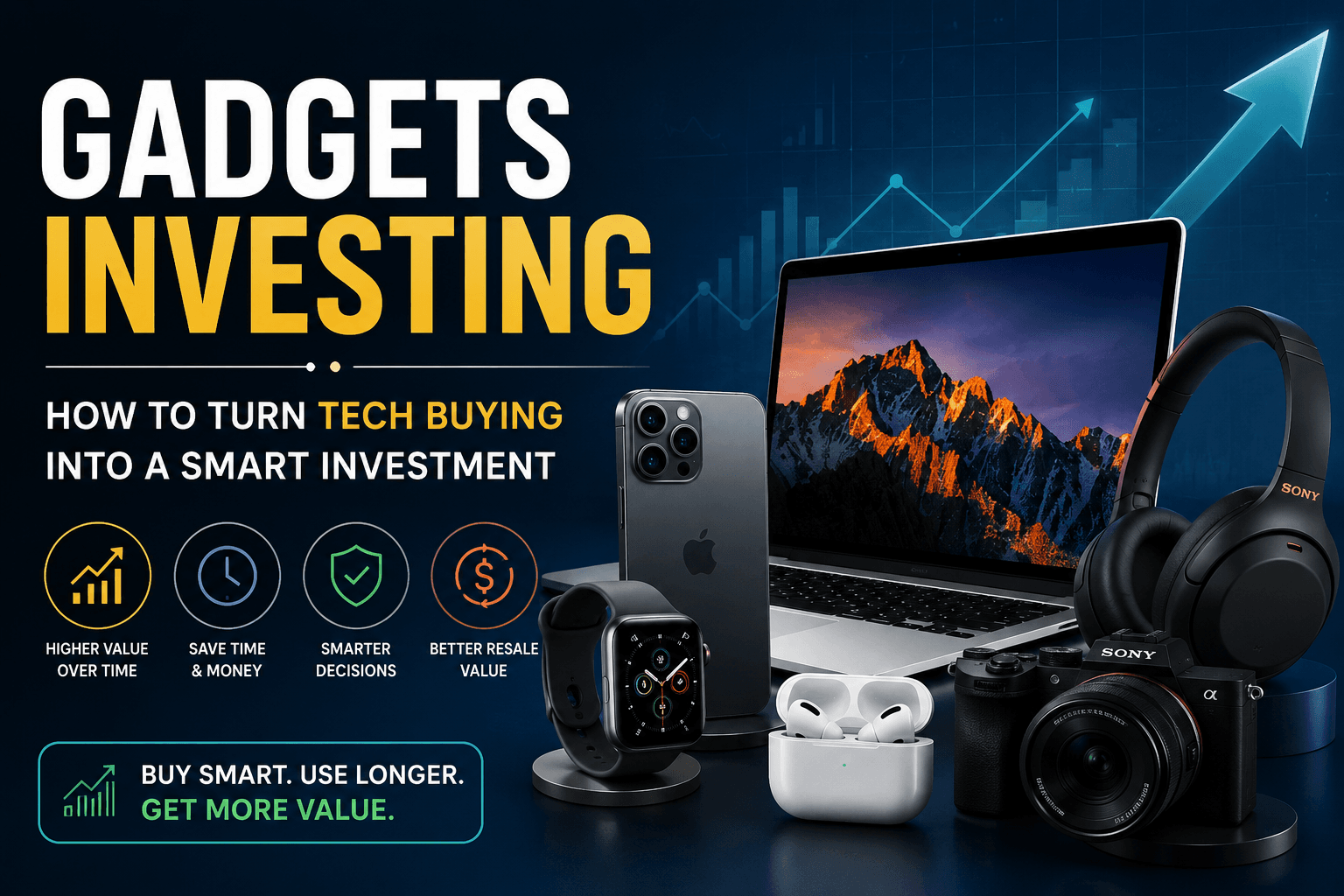
Most people see buying a new phone, laptop, or smart gadget as an expense rather than an investment, not investing it. But the idea of gadgets investing turns that logic on its head. Every tech purchase is seen as a decision with a return: resale value, time saved, problems solved, or years of steady use. When you think about it this way, when you buy gadgets, it’s less about getting the latest release and more about establishing a portfolio of tools that pay you back.
From Impulse Spending to Intentional Gadgets Investment
For years, the tech shopping engine has been the excitement of the launch day – enormous lines, countdown timers, and marketing that stresses haste over genuine necessity. Gadgets investing against that trend. It asks a simple question before any purchase, will this device still be earning its cost a year from now or will it be languishing in a drawer as something newer takes its place? That one change of attitude differentiates the wise gadget consumer from the one who just buys whatever is hot.
What is Gadgets Investing?
Gadgets investing is the practice of judging electronics purchases like an investor would any other asset – looking at the long-term value, depreciation, and return, as opposed to the initial price tag or how exciting a launch event made the device seem. This does not mean that each device must recover the money directly. That is, will it find a place in the world through everyday use, will it keep its resale value pretty well, or will it save enough time and money during its life to make it worth the cost?
Buying Gadgets vs Investing in Gadgets: What’s the Difference?
Buying a device is a one-time purchase. When you buy a device, you have to consider what happens after you buy it – how long it will be useful, how rapidly it will depreciate, whether it is part of a larger, more intentional strategy around spending on tech, rather than a one-off impulse purchase.
Why Gadgets Investing Is Not Investing In Finance
It is worth being explicit about boundaries. Gadget investment is a spending mindset rather than a financial plan in the usual sense – nobody is buying a smartwatch expecting profits. It’s kind of like investing. The same basic rules apply: Do your homework before you put your money down. Consider the long-term worth above the short term expense. Don’t make choices based solely, on buzz or pressure.
Why Investing in Gadgets Is More Relevant Now
Tech prices have been creeping up, release cycles are getting shorter, and the number of new products continues to grow. At the same time more individuals are working remotely operating side hustles or using their devices to make money which makes the real cost of choosing the wrong technology that much higher not only in dollars but in missed productivity when a cheap or short lived device craps out at the worst time.
Depreciation: The Hidden Cost That Most Gadget Shoppers Neglect
Any piece of equipment loses its worth the instant you make use of it, although the rate of depreciation varies tremendously. Some devices retain 60 to 70 percent of their value after a year. Others plummet to below 30 percent. Gadget investment means watching that curve before you buy, not finding out too late when you want to sell or trade in your old item.
How More Frequent Release Cycles Are Changing Customer Behaviour
Manufacturers are now introducing new models on a tighter annual or even biannual cycle, which speeds up the obsolescence of existing gadgets. That speed benefits customers who are thinking about long term value, not chasing the latest model, because the newest model has the sharpest depreciation curve of all.
How to Think Like a Gadgets Investing
How to Check Resale Value Before Buying a Gadget
One of the easiest methods to make a more intelligent investment is to look at how well a certain model has retained its resale value in the past. A brand and product line with a reputation for long life and software support will generally degrade more slowly . A safer bet , even if it costs more up front .
How to Calculate the Cost Per Year of Using the Gadget
The price tag alone does not provide a clear image. For a more accurate estimate, divide the cost by the number of years the product is realistically useful. It’s easier to justify spending more on a laptop that will last you six years than it is to spend less on one that you’ll have to replace after two.
Why Software Support and Update Timelines Are Important For Gadgets Investing
Even if the hardware is still good, gadgets lose real-world value fast if they cease getting software upgrades. A manufacturer’s update history and support pledges serve as a safeguard against a device becoming super outdated long in advance of expectations before you buy.
Why You Should Not Buy at the Very Start of a Product’s Life
Early releases are more expensive, and are more likely to have unsolved defects. Waiting a few months after launch, when initial software glitches are ironed out and costs settle, generally improves the real return on a gadget purchase.
Gadget Value in the Long Term and Ecosystem Compatibility
A gadget that integrates smoothly with what you already have — same charging standards, same software, shared accessories — tends to offer more enduring value than one that needs you to overhaul a whole existing system. This hidden compatibility cost rarely shows up at the point of sale, but silently affects how worthwhile a product turns out to be months down the line.
Advantages of the Gadgets Investing Approach
- Financial and Practical Benefits of Investing in Gadgets
- Eliminates wasteful spending on equipment that soon lose value or become obsolete.
- Encourages more research-led, intentional buying decisions
- Often results in longer lived, higher performing gadgets over time.
- Creates a more cohesive, suitable mix of technology that functions well together
- Enables possibility to sell back or trade-in gadgets for real value down the road
Disadvantages of the Gadgets Investment Philosophy
- Factors to consider before adopting a gadgets investing mindset
- It takes more effort and research beforehand than impulse purchase
- May entail a higher upfront cost for a product with superior long-term value
- It’s hard to find resale and depreciation data for newer or niche products.
- Waiting for the “right” time to buy and missing short-term offers or discounts
- This sort of scrutiny isn’t necessary for every gadget purchase, which can make basic purchases seem needlessly complicated
Gadgets Investing: Frequently Asked Questions
Is investing in gadgets the same as investing in IT firm stocks?
No, Gadgets investment is when people buy actual gadgets that they think will have value over the long run. investment in tech stocks is when you buy shares in a company. They are two very separate financial activities that just happen to have similar reasoning around them regarding long term worth.
Which gadgets keep their value the best?
Devices from brands with good software support and consistent build quality — like some smartphone and laptop lines — tend to keep resale value better than lesser-known brands or substantially discounted ones with shorter service periods.
Is the newest gizmo usually a bad buy?
Early versions are generally more expensive and have a larger risk of software faults not yet resolved. Not always but typically you get a worse return buying right at launch than waiting a few months.
How To Determine The Resale Value Of A Device Before Buying
You may get a relatively solid estimate before you buy by looking at current resale prices of previous models in the same product line on marketplaces, and review sites that track depreciation trends.
Is it worth investing in devices for casual buyers and not only techies?
Even simple habits like cross-referencing software support dates or cost-per-year of use can make a big difference in value for anyone buying electronics, no matter how thoroughly they pulse on tech trends.
The biggest error individuals make in trying to be smart gadget investors is…
The worst single mistake is to focus just on the initial cost and ignore depreciation, software support lifecycle and compatibility with existing devices, all of which have a considerably greater impact on the real cost over the long run than the figure on the price tag.
Conclusion: Turn Every Gadget Purchase into a Smarter Investment
Gadgets investing isn’t about turning every purchase into a spreadsheet exercise it’s about reframing the thinking from can I afford this to will this actually pay off. Maybe that means looking into resale value calculating cost per year of use or just waiting a few months after launch. Little habits like these can add up to big savings and far fewer regrets, over time. When gadgets are treated this way they’re no longer an expense they’re an investment in how well your gear really works for you.
None of this means you have to become an expert or spend hours researching every single purchase. Even one or two of these behaviours examining resale patterns before a big purchase or waiting a month after a product’s release can go a long way in ensuring you get the most value out of your tech spending in the long run. The aim here isn’t perfection it’s only to make each gadget buy a bit more deliberate than the last.