









Table of Contents
Introduction
Running a tech business comes with a different set of risks than most industries deal with. A single data breach, a coding error that breaks a client’s system, or a lawsuit over intellectual property can cost far more than a typical business insurance policy is built to handle. That’s exactly the gap a technology insurance company is meant to fill.
This guide breaks down what a technology insurance company actually covers, why standard business insurance often isn’t enough for tech companies, and what to look for before choosing a policy.
What Is a Technology Insurance Company?
A technology insurance company is an insurer that specializes in coverage built around the specific risks tech businesses face — software firms, IT consultants, SaaS providers, app developers, and similar companies. Instead of offering generic business insurance, these providers structure policies around risks like data breaches, software errors, and client lawsuits tied to technology services.
Why General Business Insurance Often Falls Short
A standard general liability policy is designed around physical risks — property damage, bodily injury, that kind of thing. It usually doesn’t account for what happens when a piece of software fails, when client data gets exposed, or when a company gets accused of infringing on someone else’s code or patent. A technology insurance company fills that gap with policies designed specifically for digital and service-based risks.
Core Types of Coverage Offered by a Technology Insurance Company
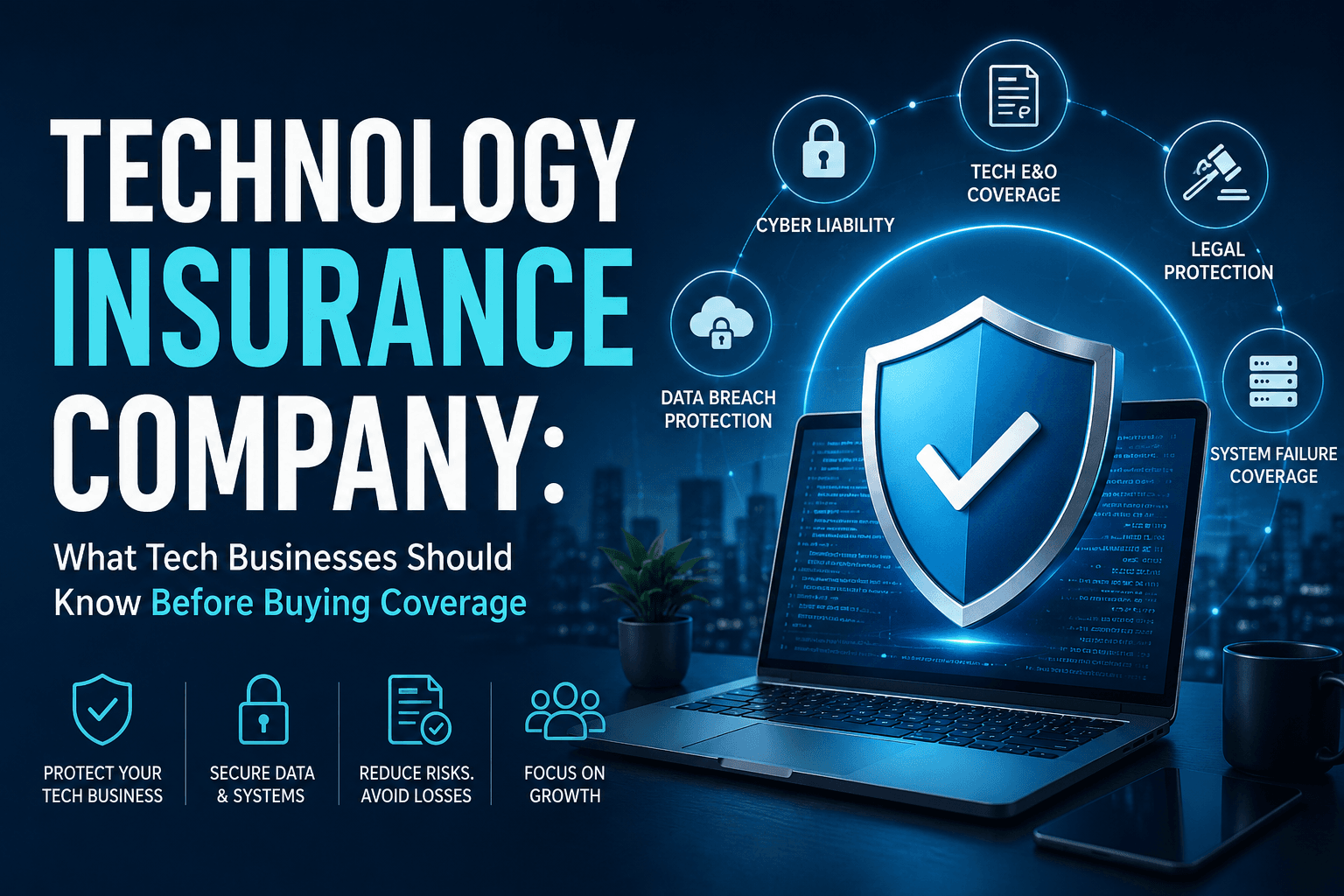
Most technology insurance company policies are built around a handful of core coverage types, often bundled together depending on the size and focus of the business.
Technology Errors and Omissions (Tech E&O)
This is usually the centerpiece of tech-focused coverage. It protects a company if a client claims their software, app, or IT service failed to work as promised and caused them financial harm. For a business that sells software or provides technical services, this is often considered essential rather than optional.
Cyber Liability Insurance
Cyber liability coverage responds to data breaches, ransomware attacks, and other security incidents. It typically helps cover costs like notifying affected customers, forensic investigation, legal fees, and sometimes regulatory fines, depending on the policy and jurisdiction.
General Liability Insurance
Even tech companies need basic coverage for things like third-party bodily injury or property damage — for example, if a client visitor is injured at your office. Most technology insurance company packages include this as a baseline layer.
Professional Liability Insurance
Sometimes bundled with Tech E&O, this covers claims related to professional advice or services that didn’t meet expected standards, separate from a specific software failure.
Intellectual Property Coverage
Tech companies are often exposed to claims involving patents, copyrights, or trade secrets — either from being accused of infringement or from needing to defend their own IP. Some technology insurance company policies include this as an add-on rather than a standard inclusion.
Why Tech Companies Are Considered Higher Risk
Insurers tend to treat technology businesses differently than more traditional industries, and understanding why helps explain how policies get priced and structured.
Constant Exposure to Digital Risk
Software bugs, server outages, and security vulnerabilities are an ongoing reality for any company building or maintaining digital products. A single overlooked vulnerability can lead to a costly claim, which is part of why a specialized technology insurance company evaluates risk differently than a general insurer would. Founders who’ve already invested in startup gadgets and other early-stage tools often overlook insurance entirely until a claim forces the issue.
High-Value Client Relationships
Tech companies frequently work with clients whose businesses depend heavily on the software or services being delivered. When something goes wrong, the financial impact on the client — and by extension, the liability exposure for the tech company — can be significant.
Rapidly Changing Regulations
Data privacy laws and cybersecurity regulations continue to evolve across different regions. A technology insurance company that specializes in this space tends to stay closer to these regulatory shifts than a general insurer might, which can matter when a claim involves compliance issues.
What to Look for When Choosing a Technology Insurance Company
Not all technology-focused insurers structure their policies the same way, so a few factors are worth comparing carefully.
Industry Specialization
Look for a technology insurance company that has genuine experience underwriting policies for businesses similar to yours — a small SaaS startup has very different risk exposure than a large enterprise IT contractor, and pricing or coverage terms should reflect that.
Coverage Limits That Match Your Risk
It’s worth thinking realistically about worst-case scenarios. A data breach involving a large customer base can generate costs far beyond what a minimal policy would cover, so limits should be chosen based on actual exposure, not just the cheapest available option.
Claims Handling Reputation
A policy is only as good as how the insurer handles claims when something actually goes wrong. Checking reviews, industry reputation, and how quickly a technology insurance company typically processes claims can matter more than the premium price alone.
Policy Exclusions
Every policy has exclusions, and this is where problems often surface later. It’s worth reading carefully — or asking a broker to clarify — what specific situations aren’t covered, especially around emerging risks like AI-related liability or supply chain software vulnerabilities.
Common Misconceptions About Tech Insurance
A few assumptions tend to trip up founders when they’re shopping for coverage for the first time.
“General liability insurance is enough.” As covered earlier, general liability doesn’t address most of the risks unique to software and data-driven businesses. Relying on it alone often leaves significant gaps.
“Small companies don’t need cyber coverage.” Smaller businesses are frequently targeted specifically because attackers assume their security measures are weaker, which makes this assumption particularly risky.
“All tech insurance policies are basically the same.” Coverage structures, exclusions, and claim processes vary significantly between insurers, even when the marketing language sounds similar.
Industries That Benefit Most From Specialized Tech Coverage
While almost any technology business can benefit from working with a technology insurance company, a few categories face particularly high exposure.
SaaS and Software Providers
Companies whose entire product is software face constant risk from bugs, downtime, and data handling issues. If a platform goes down during a critical business period for a client, the financial fallout can quickly turn into a liability claim. This kind of risk isn’t limited to enterprise software either — even consumer-facing platforms built around technology play gaming rely on the same underlying servers, processors, and networking infrastructure that can fail and trigger a claim.
IT Consultants and Managed Service Providers
Consultants who manage client infrastructure or provide ongoing technical support often have deep access to sensitive systems and data. That access creates meaningful exposure if something goes wrong on their watch, even if the root cause wasn’t entirely their fault.
App Developers
Mobile and web app developers frequently handle user data directly, which puts them squarely in the path of privacy regulations and potential breach liability, especially as data protection laws continue to tighten globally.
AI and Machine Learning Companies
This is a newer but rapidly growing category. As AI tools get integrated into decision-making processes for clients, questions around liability for incorrect outputs or biased algorithms are becoming a bigger part of how a technology insurance company evaluates risk. It’s also worth noting that the institutional investors backing many of these companies, such as this limited partner profile, often expect adequate risk coverage to be in place as part of their due diligence before funding rounds close.
Red Flags to Watch for When Comparing Policies
A few warning signs are worth taking seriously when reviewing options from different providers.
Vague policy language. If it’s unclear exactly what triggers a claim payout, that ambiguity usually favors the insurer, not the business.
Unusually low premiums with broad claims. A price that seems too good compared to competitors often means the coverage has more exclusions than advertised.
No dedicated tech claims team. Insurers without staff experienced in handling technology-related claims can take significantly longer to process and resolve issues.
Limited support for regulatory response. Given how often data privacy rules change, a technology insurance company without resources to help navigate compliance during a breach can leave a business handling that burden alone.
Pricing from a technology insurance company depends on several factors: company size, annual revenue, the type of technology services offered, claims history, and the specific coverage limits chosen. Because pricing varies so widely based on individual risk profiles, it’s generally more useful to request quotes directly from a few specialized insurers rather than relying on a single average figure. A licensed insurance broker who works specifically with tech businesses can also help compare options based on your company’s actual risk profile.
Frequently Asked Questions
What does a technology insurance company typically cover? Most policies include some combination of technology errors and omissions coverage, cyber liability, general liability, and sometimes intellectual property protection, tailored to the risks tech businesses commonly face.
Is cyber liability insurance the same as general tech insurance? No. Cyber liability specifically covers data breaches and security incidents, while a broader technology insurance company policy often bundles that together with errors and omissions coverage and general liability.
Do freelance developers or small IT consultants need this kind of insurance? Often yes, especially if they handle client data or deliver software that clients depend on. Even small operations can face significant claims if something goes wrong.
How is a technology insurance company different from a regular business insurer? A specialized provider structures policies specifically around software, data, and technology-service risks, rather than offering the physical-risk-focused coverage typical of general commercial insurance.
What’s the biggest coverage gap tech companies overlook? Intellectual property disputes and AI-related liability are commonly underinsured, since many standard policies still don’t fully account for these emerging risk areas.
Should a company get quotes from multiple providers? Yes. Coverage terms, exclusions, and pricing can vary significantly between insurers, so comparing a few options — ideally with the help of a broker familiar with tech businesses — usually leads to better-suited coverage.
Final Thoughts
Choosing the right technology insurance company isn’t just about checking a compliance box — it’s about protecting a business from the specific risks that come with building and delivering technology. General business insurance rarely covers the kind of claims tech companies actually face, which makes specialized coverage worth the extra research. Comparing providers on specialization, coverage limits, and claims reputation, rather than price alone, tends to make the difference when a real claim eventually comes in.
This article is intended for general informational purposes and isn’t a substitute for advice from a licensed insurance professional. Coverage needs vary by business, so consulting a broker or insurer directly is recommended before making a final decision.